Does a Yes/No Question Go Up or Down? English Question Intonation Explained
Published 11 November 2026
Short answer: a yes/no question usually goes up at the end — Are you ready for lunch? ↗. A question that starts with what, where, who, why, when or how usually goes down — Where did you park the car? ↘. Ordinary statements and instructions go down too. The one to watch is the sentence said as a surprised question, which goes up even without a question word.
That is the whole rule for everyday English, and it holds for both British and American speech. The rest of this page shows what those endings look like as real pitch lines, why speakers of Chinese, Japanese, Korean, Spanish and French often get them the other way round, and a set of sentences to practise today.
What does “going up at the end” actually mean?
It means the pitch of the voice — how high or low it sounds — climbs on the last important word and keeps climbing to the end. It is not about volume and not about speed.
Here is a real pitch line. It was made by tracing the pitch of Apple’s American English voice (the same voice AccentEasy uses as its model) saying a yes/no question. The shaded box is the last third of a second, where the ending happens.
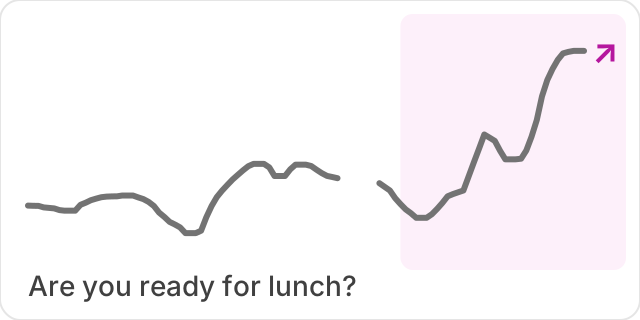
The breaks in the line are not mistakes. Sounds like f, s and ch have no voice in them, so they have no pitch. Your ear joins the pieces together without noticing.
Try this now: say Are you ready? twice — once going up at the end, once going down. The first sounds like a question; the second sounds like you already know the answer, or that you are getting impatient.
Which questions go up, and which go down?
The question word decides it: no question word, the voice goes up; a question word at the start, the voice usually goes down. Here are the five everyday patterns.
- Yes/no questions go up ↗ — questions you can answer with yes or no. Have you got a spare pen? ↗ Is the library open on Sundays? ↗
- Wh- questions go down ↘ — questions starting with what, where, who, why, when, how. Who left the light on? ↘ How did you get here? ↘
- Statements go down ↘ — sentences that tell something. The shop opens at nine. ↘
- Instructions go down ↘ — asking or telling someone to do something, even with please. Please shut the window. ↘
- Surprised questions go up ↗ — a statement said as a question, usually because you are surprised or checking. You’re leaving today? ↗
Compare a wh-question with the yes/no question above. The voice starts higher and finishes low:
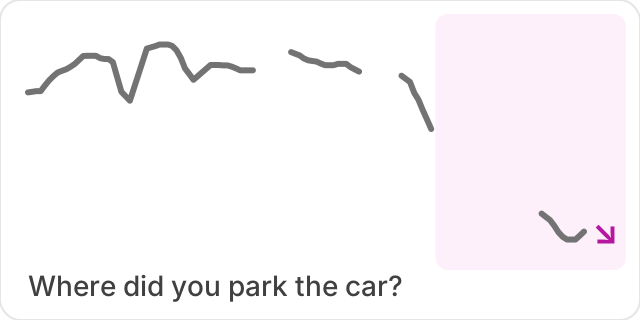
The most common mistake is giving a wh-question a yes/no rise, because “it’s a question, so it goes up”. In English, the question word already tells the listener it’s a question, so the voice is free to fall.
Why does a wh-question go down if it’s a question?
Because in English the rise is a signal of “yes or no?”, not a signal of “this is a question”. A wh-question asks for information — a place, a time, a reason — so it is said like a statement and ends with a fall.
A rise on a wh-question isn’t wrong in every situation. Speakers sometimes use it to sound extra friendly, or to ask someone to repeat something (Where did you park it? ↗ — “sorry, where did you say?”). But as a habit, a rise on every wh-question sounds uncertain, and listeners may think you are asking them to repeat something.
The same logic works the other way. A yes/no question can fall. The pronunciation site Pronuncian notes that a falling yes/no question suggests the speaker already knows the answer, and that a sharp fall can sound impatient. So the rise isn’t decoration: it changes what the question means.
Try this now: ask someone Where’s the nearest station? twice, once falling and once rising, and ask which one sounded like a real question for directions.
What about “You’re leaving today?” — a question with no question word?
When a statement is said as a question, the rise is the only thing that makes it a question, so it has to be clear. Compare the same four words said two ways:
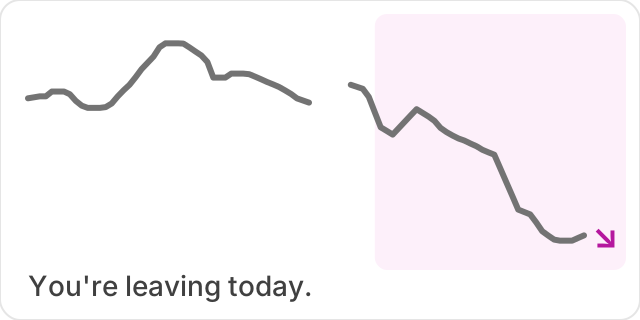
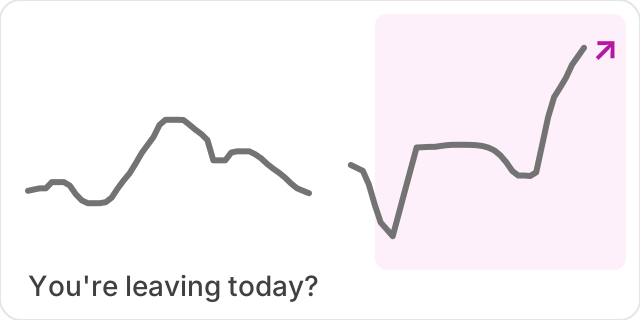
On paper the only difference is the question mark. In speech, the only difference is the ending. Surprised questions are common in conversation (You’ve eaten all of it? ↗ She’s moving to Canada? ↗), and they are usually taught a little later than the other four patterns.
Why do learners often get the endings wrong?
Most learners bring the melody of their first language into English, and each language has its own habit:
- Cantonese and Mandarin mark a question with a word such as 嗎 / 吗 and use pitch for each syllable’s tone. English questions can come out without any rise, and statements without a clear fall — “flat English”.
- Japanese marks a question with か and keeps each word’s own pitch pattern, so the voice doesn’t move across the whole sentence.
- Korean often raises the end of questions of every kind, so English wh-questions can get a rise they shouldn’t have.
- Spanish speakers usually get yes/no questions right (Spanish rises too) but may keep statements and wh-questions too level.
- French speakers often raise wh-questions, because spoken French questions like Tu vas où ? rise even with a question word.
None of this is about pronouncing sounds badly. You can say every sound perfectly and still end a question the wrong way. That is why intonation needs its own practice. If the flatness feels like it’s in everything you say, Why Does My English Sound Flat? goes further.
How can you practise question intonation at home?
Use short sentences, exaggerate the ending, and listen back. Five minutes a day is enough to change a habit.
- Read each sentence silently first and decide: up or down? Draw ↗ or ↘ after it.
- Say it with a big, slow ending. Overdo it at first; the natural size comes later.
- Record yourself with your phone’s voice recorder and listen to the last word only. Did it go where your arrow says?
- Mix the patterns. Don’t practise ten yes/no questions in a row; switch between up and down so you have to decide each time.
For parents: you don’t need strong English to help. Up and down are easy to hear, even when you aren’t sure of the words. Ask your child to point up or down after each sentence, then swap roles.
Try it: ten sentences, up or down?
Cover the arrows, decide, then say each one aloud.
- Did you remember your umbrella? ↗
- Why is the bus so late? ↘
- We’re going to the beach tomorrow. ↘
- Is it far from here? ↗
- Turn left at the bakery. ↘
- When does the film finish? ↘
- Wash your hands before dinner. ↘
- Have you fed the cat? ↗
- She’s moving to Canada? ↗ (surprised)
- What time does the meeting start? ↘
If you’d like to check the ending without relying on your ear, AccentEasy does it on the phone: you hear the model voice, say the sentence, and see your pitch line drawn over the model’s, with a clear answer on whether your sentence went up or down. Its first two Intonation lessons at every level are free, and they always include both a rising and a falling pattern.
Longer sentences bring a second skill: knowing where to pause. That’s covered in Where to Pause When Reading English Aloud.
Frequently Asked Questions
Does a yes/no question always go up?
Usually, but not always. In everyday English a yes/no question rises at the end. It can fall when the speaker already knows or expects the answer, or is impatient — and that changes how it sounds, so learners should practise the rise first.
Do wh- questions go up or down at the end?
Down. Questions starting with what, where, who, why, when or how usually fall at the end, like statements. A rise on a wh-question tends to mean “sorry, could you say that again?” or sounds unsure.
Is question intonation different in British and American English?
The basic pattern is the same: yes/no questions rise; wh-questions, statements and instructions fall. Accents differ in the size and shape of the movement, and some speakers rise at the end of statements too, but learners can use the same rules for both.
Does “please” make an instruction go up?
No. “Please shut the window” and “Shut the window, please” both fall at the end. Politeness comes from the word please and a softer voice, not from a rise. A question form is different: “Could you shut the window?” is shaped like a yes/no question, and as a polite request it can be said either rising or falling.
How long does it take to fix question intonation?
It depends on the learner, but it is a habit, so short daily practice works better than one long session. Practising a few sentences a day and listening back to your own ending is a realistic routine.
AccentEasy turns this into a two-minute habit: listen to the model, say the sentence, and see your voice drawn as a line over the model’s — with a clear answer on whether it went up or down. Download free on the App Store.